Computational science is a fast-emerging interdisciplinary field that handles complicated problems in many areas of science including physics, biology, chemistry, and engineering. Due to rapid innovation in computer hardware and software, computational science has expanded dramatically in recent years. Today’s scientists and engineers can simulate complicated systems in ways that just weren’t possible as early as a couple of decades ago.
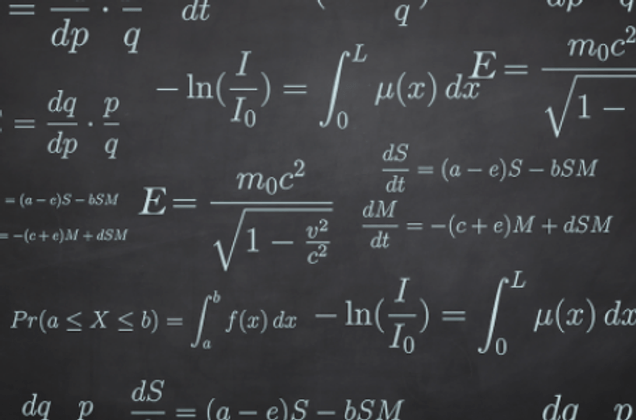
The use of mathematical models to simulate and study complicated processes is one of the main tenets of computational science. Calculus, linear algebra, and differential equations are frequently used to develop these models in advanced mathematics. After a model is created, it’s put into use to mimic how a system would behave over time. Scientists can interact with variables and examine a system’s behavior under hypothetical conditions by developing a computer model of the system. This allows them to understand the system’s fundamental dynamics and mechanics deeply.
One of computational science’s greatest benefits is its capacity to shed light on complex issues that are challenging or impossible to investigate using conventional experimental or theoretical methods. This capability has applications in almost every field, including energy, the environment, healthcare, and more. For instance, scientists can predict the spread of diseases in a population or analyze the behavior of particles in a particle accelerator using computational simulations. Additionally, it has been used to build and improve automotive and aircraft equipment, model the behavior of materials in harsh environments, and introduce fresh techniques for data processing and visualization.
Computational science can be amazing, but there are also pressing issues. Making sure the models and simulations used in computational research are accurate and reliable is a large obstacle. This demands a deep understanding of not only the computational and mathematical methods used but also of the core material. Another core issue is the influence of bias. If a model is trained on “bad” data, it will be basically trained to output “bad” or incorrect results which can have lasting consequences.
Computational science is fundamentally altering how we approach issues in science and engineering and has the potential to have a significant impact on the world. Computational science is a field that is making a difference and has a promising future, whether it’s giving us new insights into difficult situations or allowing us to make better decisions.
 SANJITA SRINATH
Leave a comment